Accidental Stewardship
Brian Eden
While I'd love to be able to lay claim to selflessness, I didn't plant my zinnias for the benefit of the bees.
I planted them because they're like growing a patch of actual sunshine in the garden. And also, if we're being honest, because they're easy and I'd killed many other less hardy candidates. (R.I.P. Delphiniums.)
These are all good reasons. The bees just happened to be a benefactor.
But then a few years ago I was listening to a podcast called the Joe Gardener Show. A guy named Doug Tallamy was talking about native plants and keystone species and the catastrophic impact of plants like the eight foot tall privet hedge I had in my yard that I'd only ever noticed when the tennis ball rolled under it.
I ordered Doug's book. Then I read the book. And by the end I was the kind of person who could explain, at length and without invitation, how many species of caterpillars depend on a single native oak tree. (More than 500.)
I pulled the privet out. Put in a pollinator garden. I stopped using pesticides and got one of those little Pollinator Pathway signs to inform the bees.
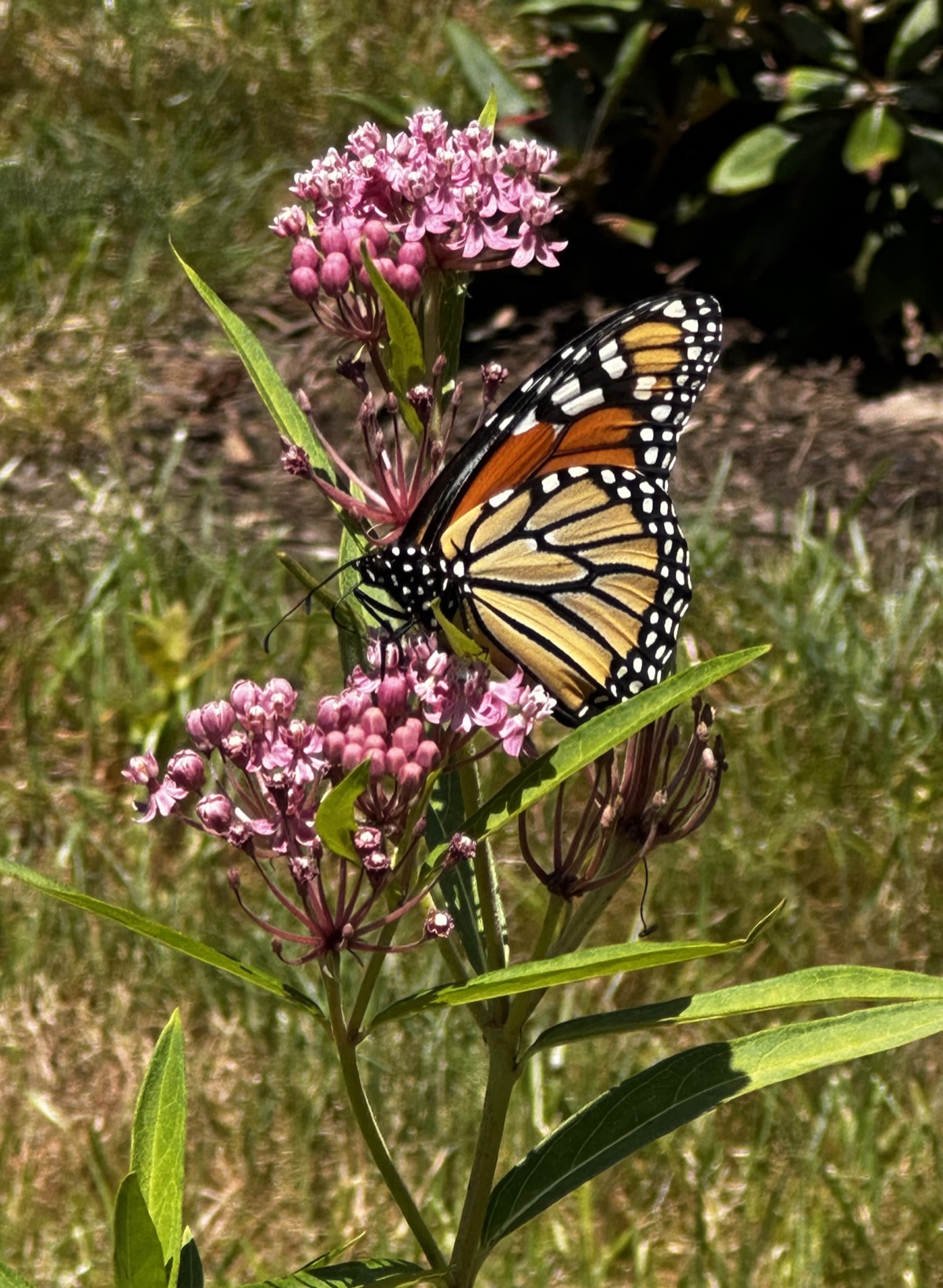
None of this was necessarily the plan. The plan was to have a nice yard in the suburbs and grow some nice tomatoes and dahlias zinnias.
But once you learn how much your little patch of earth can do to help the world, it's hard to unlearn it.
And that's what I keep coming back to: I legit had no idea. Before the podcast and the book and the backhoe and the privet and the little pollinator pathway sign and the neighbors watching from a cautious distance, I was already doing something that mattered. I just didn't know it yet.
There's a word for what I was doing, and what you're probably doing too. It's called stewardship, and it sounds like something that happens in nature preserves, botanical gardens, and the kinds of places where people wear sensible hats and carry field notebooks. It doesn't sound like something that happens in a small suburban yard in New York.
But it turns out those are all the same place. The sensible-hat people and the accidental-pollinator-garden people are tending the same world. The monarchs passing through in September don't check out your credentials before they stop (except for a brief pause to verify the little sign).
This is part of why I built Percy.
Not just for the memory capture or the planting records or the harvest logs or the weather correlation data, though Percy does all of those things, and they're important.
I think about the gardener who, like me, doesn't know yet that what they're already doing matters.
Percy is built on the belief that gardens give back more than they're given credit for. More than just the tomatoes and the begonias zinnias and the cabbage you grew despite hating cabbage.
If you ask Percy about a plant in your garden and it turns out to be something especially helpful to the little critters, Percy mentions which ones it feeds. When you mention you've swapped out some lawn for something that grows on its own, Percy responds the way a friend would: "Wait, you did that? That's a big deal." Because it is, actually, a big deal. Even if it doesn't feel like one. When the monarchs are moving through and your garden is somewhere along the route, Percy mentions it. (It doesn't remind you to get a tiny sign to help with their navigation. That part's on you.)
All of it is to help gardeners discover the difference they're making. Without having to listen to ecology podcasts or read the books or wear the hats with the drawstrings.
Caring about your garden and caring about everything it touches are the same thing. The good gardener and the good neighbor were always one person. The goldenrod already knew this. The caterpillars certainly did. Especially once that sign went in.
The rest of us are just catching up.